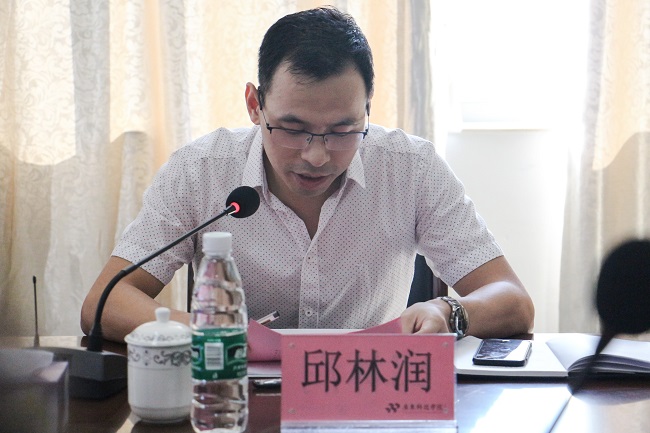
(Center of Quality Monitoring) A seminar on the training research of applied talent was held in Room 512 of the Administrative Building at Nancheng Campus on the afternoon of Sept. 24. Professor Wei Zhonglin, former Deputy Director of the Department of Education of Guangdong Province, Executive Vice President Zhou Er’yong, Vice President Wang Yanbin, Li Bing, Deputy Director of the Office of Academic Affairs, Qiu Linrun, Deputy Director of the Center of Quality Monitoring, deans as well as deputy deans of teaching of some secondary colleges, and heads of special programs attended the meeting, which was chaired by Qiu.
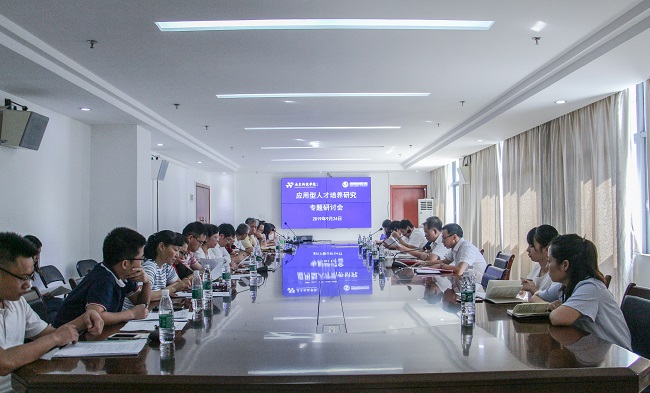
Qiu intruduced the work of the special research from the aspects of background, content, significance, development and implementation. Heads of 12 projects in 6 colleges and 2 departments introduced the research development, research ideas, work planning and concept of each project. They all have a deep understanding of the “training of applied talents”.
Executive Vice President Zhou Er’yong expressed his opinions. He proposed that this research should aim at creating a "GUST model" for the cultivation of applied talents, mentioned the "two consciousnesses" of professional construction, that is, the awareness of the target and the characteristics, which leads to the "two paths" of professional research, namely optimizing the original model as well as building a new model, clarified the overall framework of the the second Nanbo Education Summit Forum, and made a statement on the resource allocation and financial support of the research.

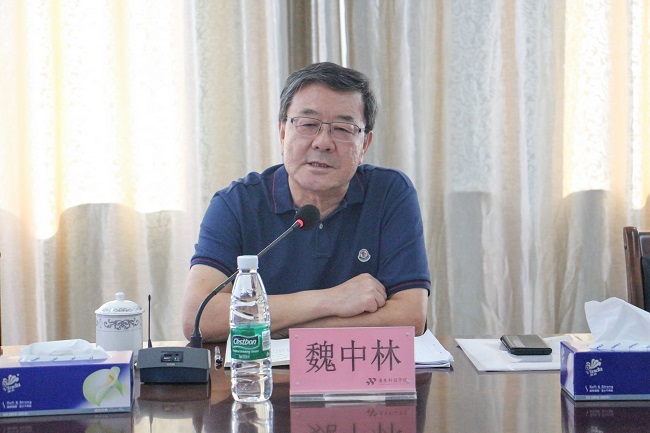
Prof. Wei Zhonglin, consultant of this special research, made a speech, in which he affirmed the achievements of the training of applied talent in our school, put forward opinions on the ideas of research implementation, and pointed out the direction for the research to improve the connotation of the school.
Since becoming a university recruiting undergraduate students, our school has been positioned as an application-oriented university and will work hard to present the "GUST Mode" in the development of high-level application-oriented higher education.